Free Calorie Calculator 2026: Find Your Daily Calorie Needs Instantly
Free Calorie Calculator 2026 to calculate your daily calorie needs for weight loss, maintenance and muscle gain using BMR and TDEE formulas instantly.
Daily Calorie Needs Calculator
Find out how many calories you need per day to maintain, lose, or gain weight based on your profile and activity level.
Health & Fitness Calculators
Track your health and fitness goals.
How to Use the Calorie Calculator
Select unit system
Choose Metric or Imperial.
Enter details
Add gender, age, weight and height.
Select activity
Choose your activity level.
Click Calculate
Get BMR, TDEE and calorie targets.
Calorie Calculator Key Features
- BMR calculation using Mifflin-St Jeor equation
- TDEE calculation with activity level multipliers
- Katch-McArdle formula using body fat percentage
- Weight loss and weight gain calorie targets
- Macronutrient distribution (Balanced, High Protein, Low Carb)
- Goal weight timeline prediction
- Metric and imperial unit support
- Calculation history (last 7 days)
- PDF/text export of results
- Browser-based — no data stored
Total Daily Energy Expenditure (TDEE) is the total number of calories your body burns in a 24-hour period — including all physical activity, digestion, and baseline physiological functions. TDEE is the most important number in any weight management plan because it represents your true caloric maintenance level, not just your resting metabolism.
TDEE is calculated by multiplying your Basal Metabolic Rate (BMR) by an activity factor that accounts for your lifestyle. Unlike BMR, which only reflects calories burned at complete rest, TDEE gives you a practical daily calorie target you can actually use to set weight loss, maintenance, or muscle gain goals.
TDEE vs BMR: Key Differences
| Factor | BMR | TDEE |
|---|---|---|
| Definition | Calories burned at complete rest | Total calories burned in a full day |
| Includes exercise? | No | Yes |
| Includes digestion (TEF)? | No | Yes |
| Used for | Baseline metabolic assessment | Setting daily calorie goals |
| Typical multiplier | 1.0 (baseline) | 1.2× to 1.9× BMR |
The Four Components of TDEE
BMR (60–70%)
The largest component — calories your organs, brain, and cells burn to stay alive, even while sleeping.
Physical Activity (15–30%)
Calories burned through deliberate exercise — running, lifting, cycling, sports.
NEAT (15–20%)
Non-Exercise Activity Thermogenesis — calories from walking, fidgeting, standing, and daily movement outside of planned workouts.
TEF (8–10%)
Thermic Effect of Food — energy your body uses to digest, absorb, and metabolize the food you eat. Protein has the highest TEF at 20–30%.
If you want a quick reference without entering your data, the table below shows pre-calculated maintenance calories (TDEE) for common age, weight, height, and activity combinations using the Mifflin-St Jeor equation.
| Profile | Sedentary | Moderate | Active |
|---|---|---|---|
| Woman, 25y, 60kg, 165cm | 1,653 cal | 2,139 cal | 2,412 cal |
| Woman, 35y, 68kg, 163cm | 1,721 cal | 2,227 cal | 2,511 cal |
| Woman, 45y, 72kg, 162cm | 1,706 cal | 2,208 cal | 2,490 cal |
| Man, 25y, 75kg, 178cm | 2,006 cal | 2,595 cal | 2,925 cal |
| Man, 35y, 85kg, 176cm | 2,076 cal | 2,685 cal | 3,028 cal |
| Man, 45y, 90kg, 174cm | 2,061 cal | 2,666 cal | 3,006 cal |
| Teen girl, 16y, 55kg, 162cm | 1,666 cal | 2,155 cal | 2,430 cal |
| Teen boy, 16y, 65kg, 172cm | 1,946 cal | 2,518 cal | 2,838 cal |
These are approximate TDEE values calculated using the Mifflin-St Jeor equation. Use the calculator above for your personalized result.
Calorie requirements change significantly across the lifespan due to shifts in basal metabolic rate, hormonal activity, lean muscle mass, and growth demands. The table below shows average daily calorie needs by age group for moderately active individuals, based on Dietary Reference Intakes (DRIs) from the National Academy of Medicine.
| Age Group | Males (cal/day) | Females (cal/day) |
|---|---|---|
| Children 4–8y | 1,400–1,600 | 1,200–1,400 |
| Children 9–13y | 1,600–2,200 | 1,400–1,800 |
| Teens 14–18y | 2,200–3,200 | 1,800–2,400 |
| Adults 19–30y | 2,400–3,000 | 1,800–2,400 |
| Adults 31–50y | 2,200–2,800 | 1,800–2,200 |
| Adults 51–65y | 2,000–2,600 | 1,600–2,000 |
| Seniors 65+y | 1,800–2,400 | 1,600–1,800 |
| Pregnancy (2nd trim.) | — | +340 above baseline |
| Breastfeeding | — | +500 above baseline |
Source: Dietary Reference Intakes — National Academy of Medicine. Values shown for moderately active individuals. Individual needs vary.
Your occupation is one of the largest determinants of your NEAT (Non-Exercise Activity Thermogenesis) — the calories you burn through daily movement outside of formal exercise. A construction worker and a software developer of the same size may differ by 700–1,200 calories per day in total energy expenditure, even if they do the same workout routine. Use the occupation guide below to choose the most accurate activity level when using this calorie calculator.
| Occupation Type | Examples | Recommended Activity Level | TDEE Multiplier |
|---|---|---|---|
| Desk / Office Work | Developer, accountant, analyst, writer | Sedentary | ×1.2 |
| Light Standing / Service | Teacher, retail, barista, receptionist | Lightly Active | ×1.375 |
| Moderate Physical | Nurse, chef, mechanic, postal worker | Moderately Active | ×1.55 |
| Heavy Physical | Construction, landscaping, warehouse | Active | ×1.725 |
| Very Heavy Physical | Military field duty, elite athlete in training | Very Active | ×1.9 |
Tip: If your workout adds 60+ minutes of exercise on top of a physical job, consider bumping one activity level higher for a more accurate TDEE estimate.
Metabolic adaptation (also called adaptive thermogenesis) is the process by which your body reduces its total energy expenditure in response to prolonged caloric restriction. This is the primary reason why weight loss slows or plateaus after the first 4–8 weeks of dieting, even when you continue eating the same amount.
Research published in the journal Obesity found that participants who lost significant weight experienced a reduction in resting metabolic rate beyond what was predicted by their body composition changes alone — a phenomenon called "metabolic suppression." This means a calorie deficit that initially produced weight loss will eventually become a maintenance intake as the body adapts.
Signs of Metabolic Adaptation
Weight loss plateau
Scale stops moving despite consistent calorie deficit and no diet cheating
Increased fatigue
Body reduces energy output for non-essential functions to preserve reserves
Feeling cold
Reduced thyroid hormone activity lowers body temperature
Increased hunger
Leptin (satiety hormone) levels fall, triggering stronger hunger signals
Reduced workout performance
Lower available energy for training intensity
Breaking a Weight Loss Plateau with Calorie Cycling
Calorie cycling — also called refeed days — involves strategically eating at or near maintenance calories for 1–2 days per week during an active diet phase. This temporarily raises leptin levels, replenishes muscle glycogen, and can partially reverse acute metabolic adaptation. A structured approach: 5 days at your weight loss calorie target, 2 days at TDEE maintenance.
How to recalculate after adaptation: If you've been dieting for 8+ weeks and weight loss has stalled, use this calculator again with your current (lower) body weight. Your new TDEE will be lower, and your deficit should be recalculated from that new baseline.
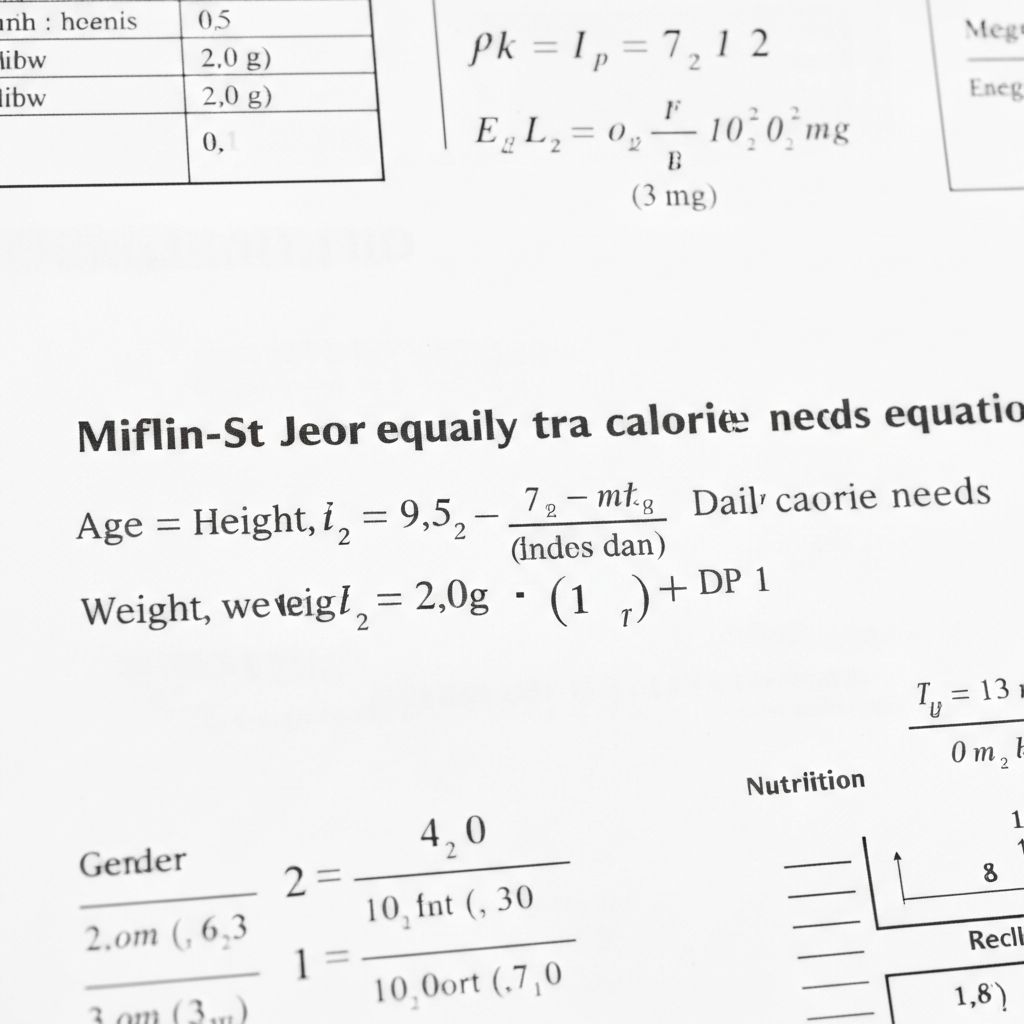
The Mifflin-St Jeor equation is the gold-standard scientific method for estimating Basal Metabolic Rate (BMR) — the number of calories your body burns at rest. Developed in 1990 by MD Mifflin and ST St Jeor, it is the formula most recommended by registered dietitians and used in clinical nutrition practice because it is significantly more accurate for contemporary populations than the original 1919 Harris-Benedict equation.
The equation takes into account your age, height, weight, and biological sex to provide a personalized estimate of your daily resting energy expenditure. By multiplying BMR by your activity level factor (PAL), we obtain your TDEE — your actual daily calorie target.
Formula Reference
Males: BMR = (10 × weight in kg) + (6.25 × height in cm) − (5 × age) + 5
Females: BMR = (10 × weight in kg) + (6.25 × height in cm) − (5 × age) − 161
Accurate calorie calculations depend on validated scientific equations. Our calculator uses the most widely accepted metabolic formulas, each suited to different body composition profiles and precision requirements.
Revised Harris-Benedict Equation
The revised Harris-Benedict equation improves upon the original 1919 formula with updated coefficients validated against modern populations. This formula is particularly reliable for individuals with average body composition, making it a widely used standard in nutrition assessments. The revision, published in 1984 by Roza and Shizgal, corrected for systematic overestimations in the original coefficients.
Katch-McArdle Formula (Advanced Mode)
The Katch-McArdle formula calculates BMR from lean body mass rather than total body weight. Since muscle tissue is metabolically active (burning ~6 cal/kg/day at rest versus fat's ~2 cal/kg/day), this formula provides significantly more accurate results for athletes, bodybuilders, and individuals with above-average muscle mass. It requires knowing your body fat percentage. Formula: BMR = 370 + (21.6 × Lean Body Mass in kg).
Consuming too few calories triggers a cascade of metabolic, hormonal, and physiological responses that compromise your health. Medical and nutritional guidelines establish minimum thresholds specifically to protect organ function, preserve lean muscle mass, and ensure adequate micronutrient intake.
Minimum Daily Calories for Men
Adult men should generally consume no fewer than 1,500–1,800 calories per day to sustain essential physiological functions including cardiac activity, hormonal regulation, neurological function, and immune response. Below 1,500 calories, men typically experience significant muscle catabolism, testosterone suppression, and impaired cognitive function. Very low calorie diets (VLCDs) below 800 cal/day must only be followed under direct medical supervision.
Minimum Daily Calories for Women
Adult women require at least 1,200–1,500 calories daily for safe physiological function. Women have unique calorie floor considerations including menstrual cycle maintenance, bone density preservation, and reproductive hormone regulation. Falling below 1,200 calories consistently has been associated with amenorrhea (loss of menstrual cycle), reduced bone density, and disordered eating patterns. Women who are pregnant or breastfeeding require significantly more calories and should never restrict without medical guidance.
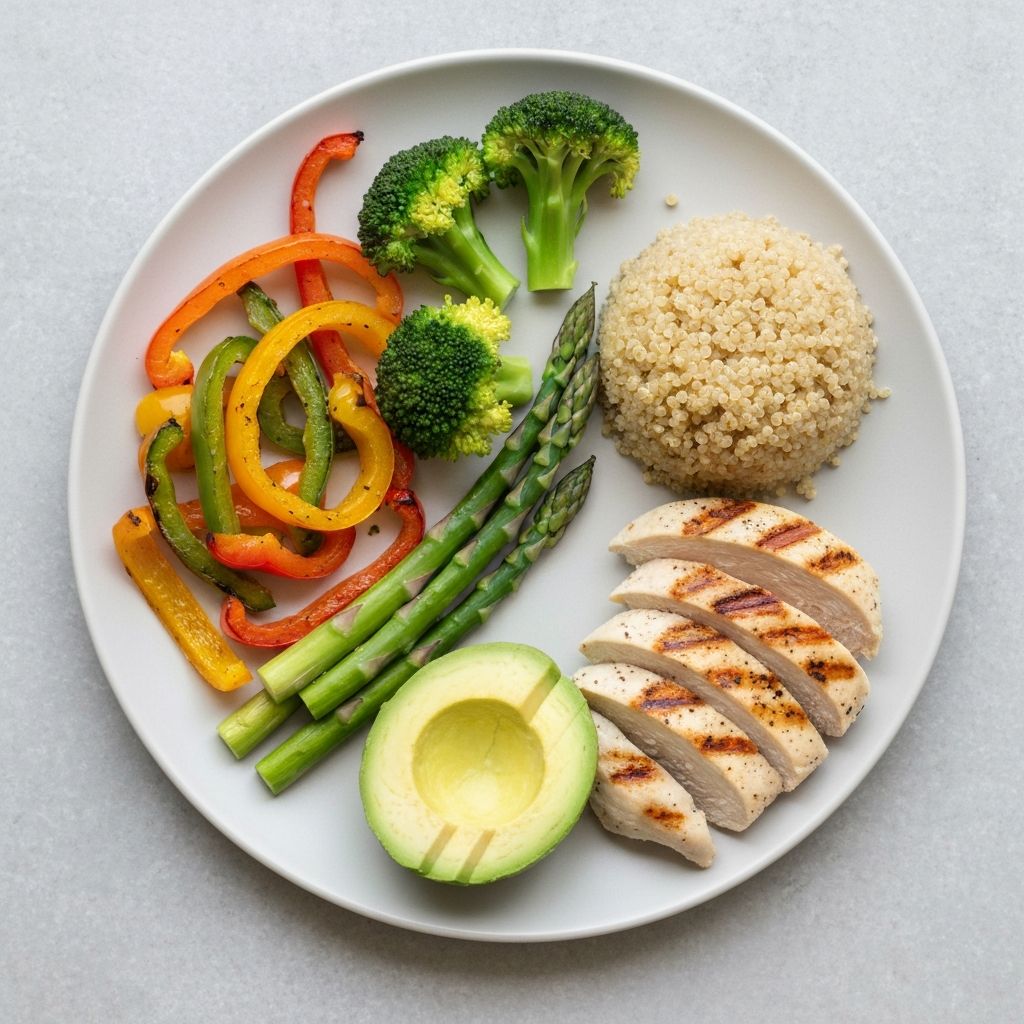
Effective calorie reduction requires a sustainable approach — extreme restriction creates metabolic adaptation, muscle loss, and rebound weight gain. The most evidence-supported strategy is a moderate deficit of 300–500 calories per day from your TDEE, implemented through a combination of dietary changes and activity increases.
Do Not Skip Meals
Skipping meals elevates cortisol, destabilizes blood glucose, and leads to compensatory overeating. Regular meal timing supports stable leptin and ghrelin levels — the hormones that regulate hunger and satiety.
Prioritize Protein at Every Meal
Protein has the highest thermic effect of food (25–30% vs 5–10% for carbs) and the strongest satiety signal. Targeting 1.6–2.2g of protein per kg of body weight preserves muscle mass during a calorie deficit, preventing metabolic slowdown.
Eat Balanced Meals with Fiber
Including protein, healthy fats, and fiber-rich carbohydrates in each meal promotes satiety and stable energy. Fiber slows gastric emptying, blunting post-meal glucose spikes that drive hunger.
Choose Whole Foods over Ultra-Processed
Whole foods provide more volume, fiber, and micronutrients per calorie than ultra-processed alternatives. Ultra-processed foods are engineered to override satiety signals — making it easier to overconsume.
Stay Hydrated
Thirst is frequently misidentified as hunger. Drinking 400–500 ml of water before meals reduces caloric intake at that meal by approximately 13%, according to clinical studies. Target 2.5–3.5L of total fluid intake daily.
Track Your Food Intake
Food journaling or app-based tracking increases dietary awareness and has been shown in multiple randomized controlled trials to nearly double weight loss outcomes compared to non-trackers, even without other changes.
Listen to Hunger and Satiety Cues
Eating to 80% fullness (the Okinawan 'hara hachi bu' principle) rather than eating to fullness naturally reduces caloric intake by 200–400 calories per day for most adults without requiring calorie counting.
Severely restricting calorie intake triggers a multi-system physiological stress response. Your body's priority becomes survival — not weight loss — and it systematically reduces energy expenditure while breaking down non-essential tissues for fuel. Understanding these mechanisms helps you pursue approaches that are both effective and safe.
Muscle Catabolism (Muscle Loss)
Below approximately 1,000–1,200 calories, the body increasingly breaks down muscle protein for gluconeogenesis (converting amino acids to glucose for brain fuel). This permanently reduces your BMR, making long-term weight management harder.
Immune Suppression
Adequate caloric intake fuels lymphocyte proliferation and antibody production. Severe restriction impairs T-cell function and reduces immunoglobulin synthesis, increasing infection susceptibility.
Micronutrient Deficiencies
Eating fewer than 1,200 calories makes it virtually impossible to meet RDAs for iron, calcium, B12, zinc, magnesium, and fat-soluble vitamins without supplementation — even with perfectly planned diets.
Cognitive Impairment and Brain Fog
The brain uses approximately 20% of the body's total caloric intake. Glucose restriction impairs working memory, executive function, and reaction time — outcomes documented in calorie restriction studies as early as day 3 of severe restriction.
Hormonal Disruption
In women, calorie restriction below metabolic thresholds suppresses GnRH production, leading to reduced LH and FSH, which causes menstrual irregularities or full amenorrhea. In men, testosterone levels decline significantly within 2 weeks of severe restriction.
Clinical Note: If you are considering calorie intakes below 1,200 calories (women) or 1,500 calories (men), always consult a registered dietitian or physician first. Medical supervision is required for very low calorie diets (VLCDs) below 800 cal/day.
Approximate calorie and energy values for commonly consumed foods across food groups.
| Food | Serving | Calories | kJ |
|---|---|---|---|
| Fruit | |||
| Apple | 1 (4 oz.) | 59 | 247 |
| Banana | 1 (6 oz.) | 151 | 632 |
| Grapes | 1 cup | 100 | 419 |
| Orange | 1 (4 oz.) | 53 | 222 |
| Pear | 1 (5 oz.) | 82 | 343 |
| Peach | 1 (6 oz.) | 67 | 281 |
| Pineapple | 1 cup | 82 | 343 |
| Strawberry | 1 cup | 53 | 222 |
| Watermelon | 1 cup | 50 | 209 |
| Vegetables | |||
| Asparagus | 1 cup | 27 | 113 |
| Broccoli | 1 cup | 45 | 188 |
| Carrots | 1 cup | 50 | 209 |
| Cucumber | 4 oz. | 17 | 71 |
| Eggplant | 1 cup | 35 | 147 |
| Lettuce | 1 cup | 5 | 21 |
| Tomato | 1 cup | 22 | 92 |
| Proteins | |||
| Beef, cooked | 2 oz. | 142 | 595 |
| Chicken, cooked | 2 oz. | 136 | 569 |
| Tofu | 4 oz. | 86 | 360 |
| Egg | 1 large | 78 | 327 |
| Fish (catfish), cooked | 2 oz. | 136 | 569 |
| Pork, cooked | 2 oz. | 137 | 574 |
| Shrimp, cooked | 2 oz. | 56 | 234 |
| Common Meals & Snacks | |||
| Bread (white) | 1 slice | 75 | 314 |
| Butter | 1 tbsp | 102 | 427 |
| Caesar salad | 3 cups | 481 | 2014 |
| Cheeseburger | 1 sandwich | 285 | 1193 |
| Hamburger | 1 sandwich | 250 | 1047 |
| Dark chocolate | 1 oz. | 155 | 649 |
| Pizza | 1 slice | 285 | 1193 |
| Rice | 1 cup cooked | 206 | 862 |
| Beverages & Dairy | |||
| Beer | 1 can | 154 | 645 |
| Coca-Cola | 1 can | 150 | 628 |
| Diet Coke | 1 can | 0 | 0 |
| Milk (1%) | 1 cup | 102 | 427 |
| Milk (2%) | 1 cup | 122 | 511 |
| Milk (whole) | 1 cup | 146 | 611 |
| Orange juice | 1 cup | 111 | 465 |
| Yogurt (low-fat) | 1 cup | 154 | 645 |
*1 cup ≈ 250 ml, 1 tablespoon ≈ 14.2 g
Example daily meal structures across three common calorie targets.
| Meal | 1200 Cal Plan | 1500 Cal Plan | 2000 Cal Plan |
|---|---|---|---|
| Breakfast | Oatmeal (250 cal) | Eggs & toast (350 cal) | Pancakes & fruit (450 cal) |
| Lunch | Salad (300 cal) | Sandwich (400 cal) | Grilled chicken (550 cal) |
| Dinner | Fish & vegetables (350 cal) | Pasta (500 cal) | Steak & potatoes (650 cal) |
| Snack | Apple (100 cal) | Yogurt (250 cal) | Nuts & berries (350 cal) |
| Total | 1,200 cal | 1,500 cal | 2,000 cal |
Estimated calories burned per hour at three body weights. Actual burn varies by intensity and individual metabolism.
| Activity (1 hour) | 125 lb | 155 lb | 185 lb |
|---|---|---|---|
| Walking (3 mph) | 210 | 260 | 311 |
| Walking (4 mph) | 280 | 346 | 413 |
| Running (5 mph) | 480 | 594 | 709 |
| Running (6 mph) | 590 | 738 | 887 |
| Cycling (moderate) | 420 | 521 | 623 |
| Swimming | 450 | 558 | 667 |
| Tennis | 420 | 522 | 623 |
| Weight training | 270 | 335 | 401 |
Different macronutrients provide different amounts of energy per gram. Fat is more than twice as calorie-dense as protein or carbohydrates.
| Food Component | kJ/gram | kcal/gram | kJ/ounce | kcal/ounce |
|---|---|---|---|---|
| Fat | 37 | 9 | 1047 | 255 |
| Proteins | 17 | 4 | 480 | 113 |
| Carbohydrates | 17 | 4 | 481 | 113 |
| Fiber | 8 | 2 | 227 | 57 |
| Ethanol (alcohol) | 29 | 7 | 821 | 198 |
| Organic acids | 13 | 3 | 368 | 85 |
| Polyols (sugar alcohols) | 10 | 2.4 | 283 | 68 |
Medically Reviewed & Maintained
This calorie calculator and its educational content are reviewed by the VIP Calculator Health & Nutrition Editorial Team for accuracy against current clinical nutrition guidelines. Calculation formulas are validated against the Mifflin-St Jeor (1990) and Katch-McArdle peer-reviewed publications.
Last reviewed: January 2026 · Next review scheduled: July 2026
Calculation Methodology
The calculator uses the Mifflin-St Jeor equation (1990) as the primary BMR formula, with the Katch-McArdle formula (1975) available in Advanced Mode for users with known body fat percentage. Both formulas are standard references in clinical nutrition and sports dietetics.
Accuracy & Limitations
Results are population-level estimates with a typical accuracy range of ±10%. Individual calorie needs may vary due to genetics, thyroid function, medications, sleep quality, chronic illness, and hormonal status. Use results as a starting point and adjust based on real-world outcomes over 2–4 weeks.
Medical Disclaimer
This tool does not constitute medical, nutritional, or diagnostic advice. For personalized dietary guidance — especially if you have diabetes, cardiovascular disease, kidney disease, eating disorder history, or are pregnant — consult a licensed physician or registered dietitian (RD/RDN).
Privacy & Data Safety
All calculations run entirely within your browser using JavaScript. No personal health information is transmitted to any server, stored, or shared with any third party.