Body Type Calculator for Men & Women – Find Your Ectomorph, Mesomorph or Endomorph
Free Body Type Calculator 2026 to identify your somatotype—ectomorph, mesomorph or endomorph—and get personalized fitness and diet recommendations.
Measure around the smallest part of your wrist (just below the wrist bone)
Health & Fitness Calculators
Track your health and fitness goals.
How to Use the Body Type Calculator
- 1. Enter Height & Wrist Circumference
Input your height and wrist circumference measured at the smallest point to determine your bone frame size.
- 2. Select Your Gender
Choose male or female. Gender affects the height-to-wrist ratio used to classify body type.
- 3. Add Optional Waist and Hip Measurements
Optionally enter waist and hip values to calculate waist-to-hip ratio and body shape.
- 4. Click Calculate Body Type
Press the Calculate button to compute your height-to-wrist ratio and classify your somatotype.
- 5. Review Personalized Recommendations
Get workout plans, macro targets, weekly schedule, and nutrition strategy based on your body type.
Key Features of the Body Type Calculator
- Identify ectomorph, mesomorph, or endomorph body type
- Visual body type diagrams with characteristics
- Detailed body type comparison table
- Personalized workout and diet recommendations
- Understanding of metabolic tendencies and genetics
- Downloadable body type report (PDF/TXT)
- Expert-reviewed health information (YMYL compliant)
Female Body Shapes in the Fashion Industry
The fashion and fitness industries often use visual body shape categories to guide clothing design and fit recommendations. While these categories provide a helpful framework for style and fitness guidance, it's important to recognize that real human bodies exist on a spectrum with considerable individual variation.
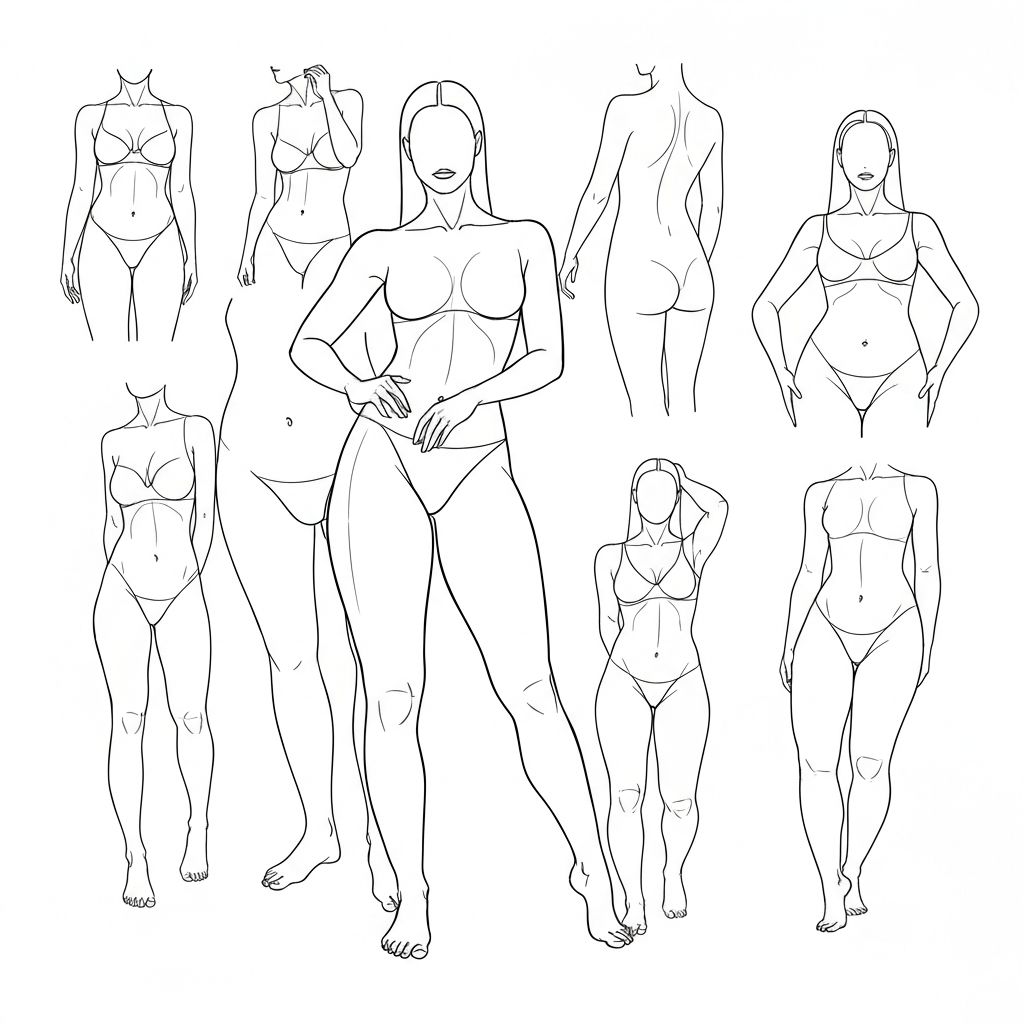
Apple (Inverted Triangle)
Apple-shaped bodies are characterized by broader shoulders and bust compared to the hips, with weight distribution concentrated in the upper body and midsection. The waist may be less defined, and the lower body appears narrower relative to the upper frame. This shape is common and often associated with higher waist-to-hip ratios.

Banana (Rectangle/Straight)
Banana or rectangular body shapes have bust, waist, and hip measurements that are relatively proportional and similar in width. Large-scale research suggests this is one of the most common natural body shapes among adults globally.

Pear (Triangle/Spoon)
Pear-shaped bodies have hips that are wider than the shoulders and bust. Weight tends to be distributed in the lower body — hips, thighs, and buttocks — often creating a visually balanced silhouette with a defined waist.

Hourglass (X Shape)
Hourglass shapes are characterized by bust and hip measurements that are nearly equal, with a narrow, well-defined waist. While historically idealized in Western culture, research indicates classic hourglass proportions are relatively rare in the general population.

Research Note: Large-scale anthropometric studies consistently show that rectangle/banana shapes are statistically most common, while true hourglasses represent a smaller percentage of the population.
How Is Your Body Shape Determined?
Body shape classifications are determined primarily by proportions — the relative measurements of different body regions — rather than overall size or weight. Two people of the same weight can have different body shapes based on where their mass is distributed. This calculator uses established anthropometric science to classify body shapes based on measurement ratios rather than visual assessment alone.
Body Shape Categories Used by This Calculator
- • Hourglass: Balanced bust and hips with narrower waist
- • Bottom Hourglass: Slightly larger lower body with defined waist
- • Top Hourglass: Slightly larger upper body with defined waist
- • Spoon: Rounded lower body, tapered shoulders
- • Triangle: Wider hips than shoulders
- • Inverted Triangle: Wider shoulders than hips
- • Rectangle: Similar measurements across body
Not all individuals fit perfectly into one category — many people have characteristics spanning multiple categories, and body shape is just one aspect of overall health and fitness.
Waist-to-Hip Ratio (WHR): Health Metrics & Fat Distribution
The waist-to-hip ratio (WHR) is calculated by dividing your waist measurement by your hip measurement. This number provides insight into fat distribution patterns. A higher ratio indicates more visceral fat concentrated around the midsection, while a lower ratio suggests fat is distributed more in the hips and lower body. WHR is used alongside somatotype assessment, not as a replacement for it.
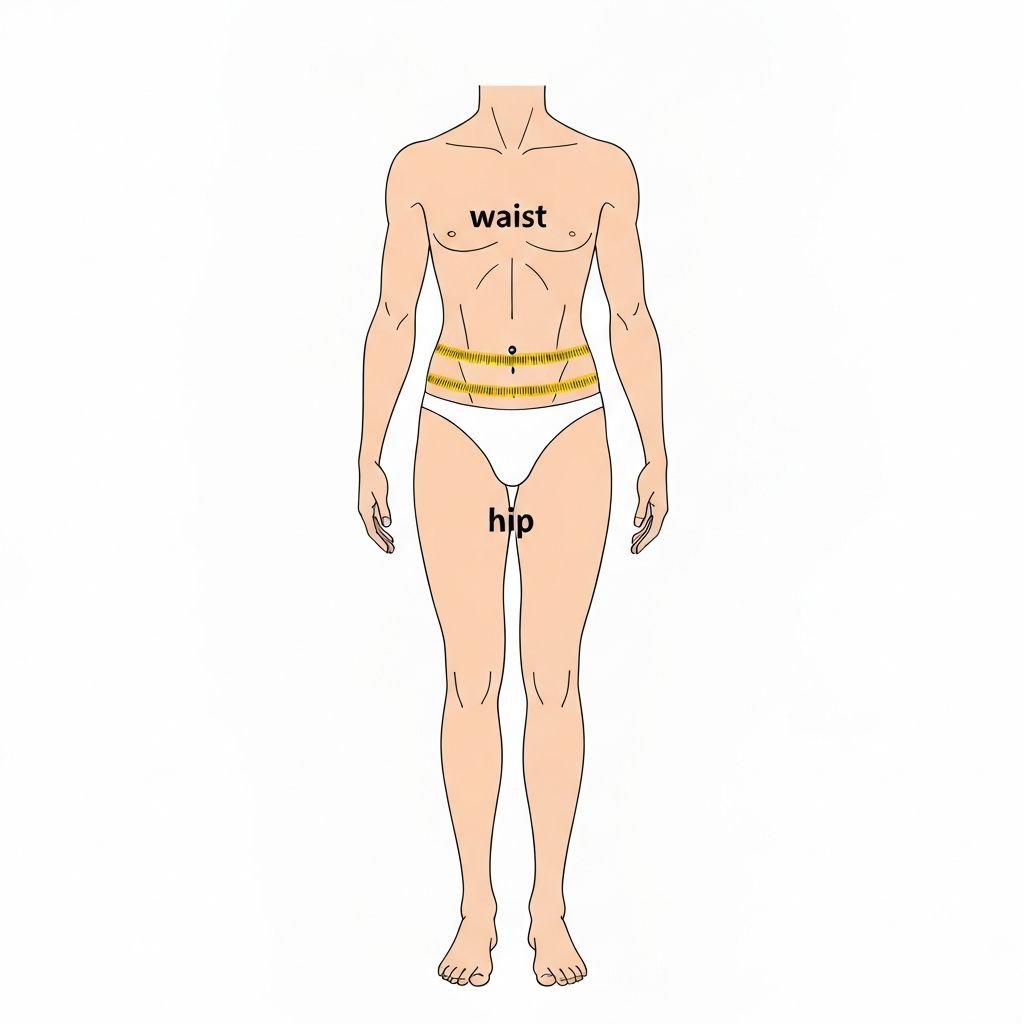
WHO WHR Health Risk Reference Ranges
| Risk Level | Men (WHR) | Women (WHR) |
|---|---|---|
| Low Risk | ≤ 0.95 | ≤ 0.80 |
| Moderate Risk | 0.96 – 1.00 | 0.81 – 0.85 |
| High Risk | > 1.00 | > 0.85 |
Source: World Health Organization (WHO) guidelines on waist circumference and waist-hip ratio.
Health Insights from WHR
Research shows that fat location matters for health outcomes. Higher abdominal fat concentration (higher WHR) is associated with elevated metabolic risk including blood pressure, lipid imbalances, and glucose dysregulation.
- • Apple-shaped bodies typically have higher WHR due to upper body fat distribution
- • Pear-shaped bodies generally have lower WHR with fat distributed in hips and thighs
- • WHR can identify health risks more accurately than BMI alone, especially in older adults and post-menopausal women
Important: Waist-to-hip ratio is a screening tool, not a diagnostic measure. Always consult healthcare providers for personalized health assessment.
Why Body Shape Matters Beyond Appearance
Understanding body shape goes far beyond aesthetics. Multiple practical and health-related reasons make body shape information valuable:
Clothing Fit & Comfort
Different body shapes require different clothing cuts for optimal fit. Understanding your shape helps you choose garments that work with your natural proportions.
Metabolic Function & Fat Distribution
Where your body preferentially stores fat is partly genetic. Understanding this pattern informs targeted health and training strategies.
Training & Nutrition Personalization
Different body types respond optimally to different training intensities and macronutrient ratios. Body shape is a useful variable for personalizing fitness programs.
Self-Understanding & Realistic Expectations
Knowing your body shape helps set realistic fitness goals aligned with your genetic predispositions, supporting healthier mindsets and sustainable lifestyle changes.
Key Principle: No body shape is inherently "good" or "bad." All body shapes can be healthy, strong, and beautiful.
Understanding the 3 Body Types (Somatotypes)
Somatotype theory was originally developed by American psychologist William H. Sheldon in the 1940s based on anthropometric measurements. While Sheldon's original personality correlations have been scientifically discredited, the physical classification framework remains a widely-used descriptive tool in sports science and fitness planning.
Ectomorph — Full Profile
Ectomorphs are naturally lean with a fast metabolism. They have a smaller bone structure, narrow shoulders and hips, and long limbs relative to height. The wrist circumference is typically small relative to height (ratio > 10.4). Ectomorphs find it challenging to gain both weight and muscle mass without deliberate caloric excess.
Notable Ectomorphs:
Brad Pitt, Bruce Lee, Kate Moss
Mesomorph — Full Profile
Mesomorphs have an athletic build with well-defined muscles and a medium bone structure. The wrist circumference is proportionate to height (ratio 9.6–10.4). They gain muscle relatively easily, have a moderate metabolism, and respond well to a variety of training styles. Mesomorphs represent the genetic 'middle ground' of somatotype theory.
Notable Mesomorphs:
Arnold Schwarzenegger, Cristiano Ronaldo, Jennifer Garner
Endomorph — Full Profile
Endomorphs have a larger, rounder bone structure with a wider frame. Wrist circumference is large relative to height (ratio < 9.6). They gain muscle and fat readily, have a slower resting metabolic rate, and require more deliberate nutritional management. Endomorphs often have a natural strength advantage due to their heavier frame.
Notable Endomorphs:
Jennifer Lopez, Beyoncé, Russell Crowe
Important Note: Most people are a combination of two body types, with one being more dominant. Pure somatotypes are relatively rare — hybrid classifications like ecto-mesomorph or endo-mesomorph are more common in practice.
Hybrid Body Types: What Most People Actually Are
Pure somatotypes — a true ectomorph, mesomorph, or endomorph — are actually rare in the general population. Sports science research consistently shows that most people fall into one of several hybrid or blend somatotypes. Understanding your blend is more useful than a single classification, because it predicts both your genetic strengths and your specific physiological challenges.
🔵🟢 Ecto-Mesomorph
Physical traits: Lean frame (ectomorph) with athletic musculature (mesomorph). Long limbs with moderate muscle mass. Common in swimmers, cyclists, and basketball players.
Training approach: Responds well to hypertrophy training without excessive cardio. Can build muscle more easily than a pure ectomorph.
Nutrition: Moderate caloric surplus with balanced macros (30% protein, 45% carbs, 25% fat).
🟠🟢 Endo-Mesomorph
Physical traits: Stocky, strong build (endomorph) with significant muscle mass (mesomorph). Wide frame with dense musculature. Common in powerlifters, rugby players, and sprinters.
Training approach: High strength capacity. Focus on fat management through consistent cardio alongside strength training.
Nutrition: Calorie maintenance or slight deficit with high protein (35%+) and moderate carbs timed around training.
🔵🟠 Ecto-Endomorph
Physical traits: Narrow shoulders and slim limbs (ectomorph) but tendency to store fat in the midsection (endomorph). Often called 'skinny fat' — appears thin but has higher body fat %. Common and often misunderstood.
Training approach: Needs both resistance training (to build muscle) and moderate cardio (to manage fat). Neither extreme works well alone.
Nutrition: High protein (30–35%), moderate carbs, watch refined carbs. Prioritize whole foods and avoid caloric surplus.
🟢🟢 Balanced Mesomorph
Physical traits: The classic athletic build. Most responsive to training with natural symmetry. Less common than hybrid types but well-represented in competitive athletes across sports.
Training approach: Progressive overload and periodization work excellently. Responds to almost any well-structured program.
Nutrition: Balanced macros (30% protein, 40% carbs, 30% fat). Caloric intake varies with training phase.
Calculator Note: This tool classifies your dominant somatotype based on bone frame size. If you feel your result partially matches two types, you likely have a hybrid classification — which is normal and expected.
Can You Change Your Body Type?
This is one of the most commonly asked questions in fitness — and the answer requires a clear distinction between what can change and what cannot.
❌ What Cannot Change: Skeletal Frame
Your bone structure — wrist width, shoulder breadth, hip bone width — is determined by genetics and growth plate development. Once growth plates close in adulthood (typically 18–21), skeletal dimensions are fixed. This is what somatotype classification measures.
✅ What Can Change: Body Composition
Muscle mass, body fat percentage, metabolic rate, and physical appearance are all highly modifiable with consistent training and nutrition. An endomorph can achieve a lean physique. An ectomorph can build substantial muscle. The underlying frame remains — how it looks changes dramatically.
The Science: Phenotypic Plasticity
In exercise science, the concept of phenotypic plasticity describes how the human body adapts its physical expression in response to environmental inputs — including training, diet, and lifestyle. Research shows that consistent resistance training can increase muscle cross-sectional area by 20–40% in 12–24 weeks, while sustained caloric deficit with protein-adequate diet can reduce body fat by 1–2% per month. These changes can make the same skeletal frame look dramatically different from one somatotype to another.
Practical takeaway: Use your body type classification as a starting point for understanding your genetic tendencies — not as a limitation. The most effective fitness journeys are those designed with your body type in mind, not against it.
Body Type & Athletic Performance: What Sports Science Shows
Sports scientists have extensively studied the relationship between somatotype and athletic performance. While elite athletes exist in every body type, certain somatotypes correlate with performance advantages in specific sports due to biomechanical efficiency, power-to-weight ratios, and metabolic characteristics.
| Sport / Activity | Ectomorph Advantage | Mesomorph Advantage | Endomorph Advantage |
|---|---|---|---|
| Marathon / Endurance Running | ⭐⭐⭐ High (low mass to carry) | ⭐⭐ Moderate | ⭐ Low |
| Swimming | ⭐⭐⭐ High (limb length advantage) | ⭐⭐⭐ High (power + reach) | ⭐⭐ Moderate |
| Sprinting / Short Distance | ⭐⭐ Moderate | ⭐⭐⭐ High (power-to-weight) | ⭐⭐ Moderate (raw power) |
| Powerlifting / Weightlifting | ⭐ Low | ⭐⭐ Moderate | ⭐⭐⭐ High (leverage advantage) |
| Bodybuilding | ⭐⭐ Moderate (lean base) | ⭐⭐⭐ High (muscle gain ease) | ⭐⭐ Moderate |
| Basketball / Volleyball | ⭐⭐⭐ High (height + reach) | ⭐⭐⭐ High (athletic versatility) | ⭐ Low |
| Rugby / American Football | ⭐ Low | ⭐⭐ Moderate | ⭐⭐⭐ High (mass advantage) |
| Gymnastics / Yoga | ⭐⭐⭐ High (low body mass) | ⭐⭐ Moderate | ⭐ Low |
Note: These are general tendencies based on biomechanical and metabolic research, not absolute rules. Elite athletes succeed in all sports regardless of somatotype through targeted training and dedication.
Body Type Comparison: Full Characteristics
| Characteristic | Ectomorph | Mesomorph | Endomorph |
|---|---|---|---|
| Build | Lean, thin | Athletic, muscular | Larger, rounder |
| Metabolism | Fast (high BMR) | Moderate | Slow (low BMR) |
| Weight Gain | Difficult | Moderate | Easy |
| Muscle Gain | Challenging | Easy | Moderate |
| Body Fat (men) | 6–15% | 8–18% | 15–25% |
| Body Fat (women) | 14–20% | 16–24% | 22–32% |
| Bone Frame | Small, narrow | Medium, sturdy | Large, wide |
| Ideal Cardio | Minimal (2–3×/week) | Moderate (3×/week) | High (4–5×/week) |
| Protein Target | 1.5–2g/kg | 1.6–2g/kg | 1.8–2.2g/kg |
| Best Training | Heavy compound lifts | Varied — strength + cardio | HIIT + circuits |
| Limbs | Long relative to torso | Proportionate | Shorter relative to torso |
| Recovery Speed | Moderate | Fast | Moderate |
Frequently Asked Questions
What are the 3 main body types?
The 3 main body types are ectomorph (lean, fast metabolism), mesomorph (athletic, medium frame), and endomorph (larger frame, slower metabolism). Most people are a blend of two types. These are called somatotypes, a classification system developed in the 1940s and still used in sports science today.
Can your body type change over time?
Your genetic bone structure (frame size) does not change after skeletal maturity. However, your body composition — muscle mass and body fat — can change dramatically with consistent training and nutrition. This ability to transform physical appearance despite a fixed frame is called phenotypic plasticity.
How accurate is the wrist circumference body type calculator?
The wrist circumference method estimates bone frame size as a proxy for somatotype. It is a practical screening tool but less precise than clinical assessment methods like DEXA or hydrostatic weighing. Most users find it matches their perceived body type 70–80% of the time, making it a useful starting framework.
What body type gains muscle the fastest?
Mesomorphs typically gain muscle fastest due to favorable anabolic hormone response and medium bone density. However, ectomorphs and endomorphs can build significant muscle with proper training. Endomorphs often have a strength advantage due to their heavier frame and higher natural body weight.
What is an ecto-mesomorph or endo-mesomorph?
These are hybrid somatotypes — blends of two body types. An ecto-mesomorph is lean with athletic musculature (common in swimmers and cyclists). An endo-mesomorph is stocky with significant muscle mass (common in powerlifters). Most people are hybrid types rather than pure somatotypes.
What body fat percentage does each body type have?
Typical ranges: Ectomorphs 6–15% (men), 14–20% (women). Mesomorphs 8–18% (men), 16–24% (women). Endomorphs 15–25% (men), 22–32% (women). These are tendencies, not limits — body fat is determined by lifestyle and training, not body type alone.
What is the best diet for an endomorph?
Endomorphs do best with lower refined carbohydrates, high protein (1.8–2.2g/kg), and moderate healthy fats. A caloric deficit of 300–500 calories below TDEE is recommended for fat loss. Carbohydrates should be timed around workouts and come from whole food sources like oats, sweet potato, and vegetables.
Should I train differently based on my body type?
Yes. Ectomorphs benefit most from heavy compound training with minimal cardio and long rest periods. Mesomorphs respond well to varied training. Endomorphs see the best results from HIIT and circuit training with short rest periods. These are starting guidelines — individual response varies.
Is body type (somatotype) scientifically valid?
Somatotype classification retains utility in sports science as a descriptive framework for body structure tendencies. Sheldon's original psychological correlations from the 1940s have been discredited, but the physical classification is still used in exercise physiology and athletic coaching as a practical tool.
What sports suit each body type?
Ectomorphs excel in endurance sports (marathon, swimming, basketball). Mesomorphs thrive in versatile sports (sprinting, bodybuilding, team sports). Endomorphs have advantages in strength sports (powerlifting, rugby, wrestling). These correlate with biomechanical and metabolic advantages, not absolutes.
Scientific References & Sources
Our body type classifications and health information are based on peer-reviewed research and authoritative health sources:
Healthline: Body Type Quiz & Guide
Medically reviewed somatotype information
WebMD: Body Type and Exercise
Evidence-based fitness recommendations by body type
PubMed: Somatotype and Body Composition
Peer-reviewed research on body type classification
WHO: Waist Circumference and Waist-Hip Ratio
Official WHO guidelines on WHR health risk thresholds
Medical Disclaimer
This tool is for informational and educational purposes only. It is not a substitute for professional medical advice, diagnosis, or treatment. Somatotype classification is a general fitness framework — not a clinical diagnostic tool. Always consult a qualified healthcare provider before making significant changes to your diet or exercise routine.
Our Editorial & Accuracy Standards
VIP Calculator is a free tool site committed to accuracy and transparency. Here is how this page's content is produced and maintained:
Source-Based Content
All health and fitness claims are grounded in peer-reviewed research or guidelines from recognized health organizations (WHO, ACSM, NIH).
Referenced & Linked
Every key claim includes a reference to the original source. We link to PubMed studies, WHO guidelines, and medically reviewed publications.
Regularly Updated
This page is reviewed and updated when new research or guideline changes are identified. Last content review: January 2026.
Limitations Disclosed
We clearly state the limitations of somatotype theory and the wrist-circumference method. We do not overclaim accuracy or medical validity.
About VIP Calculator
VIP Calculator is a free online tool platform providing fast, accurate calculators for health, finance, and mathematics. Our health tools are built using established scientific formulas and cross-referenced against authoritative sources including WHO guidelines and peer-reviewed fitness research. We do not claim to provide medical advice — our tools are educational aids to help you understand your body and set informed fitness goals.
Learn more about us →Content last reviewed: January 2026 · Formula accuracy verified against ACSM and WHO published standards.